When your college student is struggling
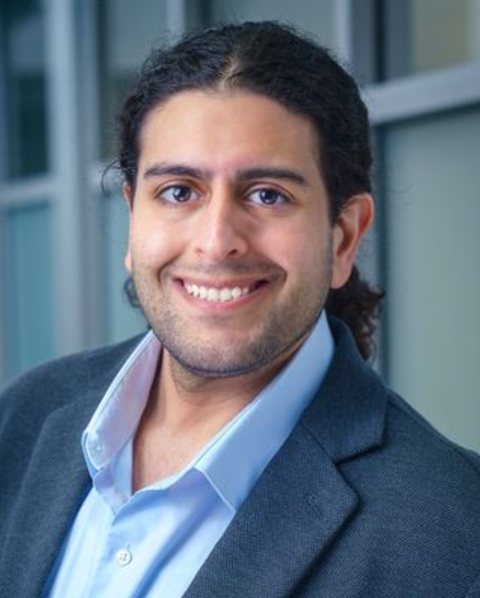 Theodore Germanos, MDBoard certified in psychiatry and in child & adolescent psychiatry (American Board of Psychiatry and Neurology) and in addiction medicine (American Board of Preventive Medicine)
Parents usually notice first. The grades slip. The calls get shorter. Your student comes home for a break and something is off. You are not sure if it is a rough term or a real problem. This page covers what I see most often in college students, what you can and cannot do once your child is 18, and how care with me works.
Why it shows up in college
Most mental health conditions start young. In a large national study, half of all lifetime cases had started by age 14 and three quarters by age 24. College sits right in that window.
College also takes away the things that were holding a student up. No one wakes them. No one checks the homework. Sleep, food and study time are now their job. A problem that stayed hidden at home often comes out in the first or second year.
It is common. In a national survey of college students in 2020 and 2021, more than 60% met criteria for at least one mental health problem. That was close to a 50% rise from 2013.
What I see most often
ADHD. Many bright students got through high school on structure and effort. College removes the structure. A first ADHD diagnosis at 19 or 20 is ordinary, not late. Autism spectrum belongs in the same conversation. It is often missed in students who did well in school, and it can look like ADHD, anxiety, or both.
Depression and other mood problems. It does not always look like sadness. It can look like sleeping all day, skipped classes, or a student who stops caring about things they used to love. Bipolar disorder also tends to first appear at this age, which is one reason a careful evaluation matters before any medication.
Anxiety. Panic before exams. Dread about class. Avoiding the dining hall, office hours, or email. From the outside it often looks like procrastination.
Alcohol, cannabis, nicotine and pills. Some use is common in college. Use that is daily, hidden, or needed to sleep or to study is different. Stimulant misuse is most common among college students. Addiction medicine is one of my boards, so this is a regular part of my work, and a student can talk about it here without it becoming a school matter.
Betting and trading. Sports betting, prediction markets and fast trading now live on the same phone as everything else. For some students it stops being fun. I wrote more about that here.
Sleep. A schedule that has fallen apart makes every problem above worse. It is often the first thing we fix.
Signs worth acting on
A drop in grades that your student cannot explain. Classes dropped or a term withdrawn. Sleeping through the day. Weight change. Calls that stop. Money that goes missing or requests for money that do not add up. Drinking or using that your student hides or gets angry about. Talk of being a burden, or of not wanting to be here.
One of these can be a bad month. Several together, or any talk of self-harm, is a reason to act now.
What changes when your child turns 18
At 18 your student is an adult patient. The record belongs to them. That is true even if you pay for the visit and even if they are on your insurance.
Without your student’s written permission, I cannot tell you what they said, what the diagnosis is, or whether they showed up. The exception is a real safety emergency.
You can still be part of this. The application includes an optional release form. Your student can name you on it and decide how much I may share. And you can always tell me what you are seeing, even when I cannot answer back.
How to bring it up
Say what you saw, not what you think it is. “You have missed a lot of class and you sound flat” lands better than “I think you are depressed.”
Make it easy. Offer to pay. Offer to sit with them while they fill out the form. Send them the page written for students: psychiatry for college students.
Do not make it a threat. Tying care to tuition or the car usually gets you a student who shows up and says nothing.
If you are worried about ADHD medication
Most parents are, and the worry is reasonable. Here is what the research says. Stimulant misuse does happen, and it is most common among college students. In 2023 national surveys, between 1.4% and 3.7% of young adults said they had misused a stimulant in the past year, and that rate has been falling. But long-term studies do not support a link between properly prescribed stimulant treatment in the teen years and later addiction.
How it is prescribed matters. Nothing is prescribed before a full evaluation. I check California’s prescription database. Follow-up visits are regular. And ADHD is not the answer every time. Sometimes the real problem is sleep, mood, anxiety, or cannabis, and the plan follows that.
Where your student needs to be
I am licensed in California. Your student must be physically in California at the time of each visit. It does not matter which campus, or which state you live in.
If your student leaves California for a break or a program, visits pause until they are back. We plan for that ahead of time.
Cost and insurance
The practice is private pay and out of network. Many student and family plans pay back part of out-of-network care, and I provide a superbill on request. The full fee schedule is shown inside the application before anyone agrees to anything. No card is needed to apply.
What this practice is and is not
This is an independent private practice. It is not affiliated with, endorsed by, or contracted with UC San Diego, San Diego State, or any other university. It is not student health or campus counseling.
Campus counseling is a good first stop, and it is usually free. It is mostly built for short-term help. Students who need medication managed over months are often referred off campus. That is where a practice like this fits.
How care works
Your student applies
A short form online. About 5 to 7 minutes. No card required.
Evaluation
60 to 90 minutes by secure video. Nothing is prescribed before it.
Plan
Treatment and follow-up that fit a school schedule, breaks included.
Can I book the appointment for my son or daughter?
If your student is 18 or older, they need to apply themselves. They are the patient, and the consent has to be theirs. You can sit with them while they fill it out, and you can pay. If your student is under 18, a parent applies with them and is part of care from the start.
Will you tell me what my student says?
Only with their written permission. The application includes an optional release form where your student can name you and say what I may share. Many students sign it. Some share a little and some share everything. The choice is theirs, and they can change it.
Can I tell you what I am seeing?
Yes. You can always tell me what you have noticed, and it often helps. I may not be able to answer back or even confirm that your student is my patient. That silence is the law doing its job. It is not a sign that I did not read what you sent.
My student says nothing is wrong. What can I do?
You cannot make an adult get care, and pushing hard usually backfires. Say what you saw, plainly and once. Offer to pay and to help with the form. Then leave the door open. Many students come back to it a few weeks later, on their own terms.
Is it safe to put a college student on ADHD medication?
It is a fair worry. Some students do misuse stimulants. But long-term studies do not support a link between properly prescribed stimulant treatment in the teen years and later addiction. What matters is how it is done: a full evaluation first, a check of California’s prescription database, and regular follow-up. I am also board-certified in addiction medicine, so substance use is asked about every time, not assumed away.
My student goes to school in California but we live in another state. Does that work?
Yes, while they are in California. A California license covers a patient who is located in California at the time of the visit. When your student is home in another state, visits pause until they are back. We plan for breaks ahead of time.
Is this an emergency service?
No. This is scheduled care by video. If you think your student is in danger right now, call 911. You can also call or text 988 at any hour. If you cannot reach your student, campus police or local police can do a welfare check.
The studies cited above, found through PubMed. Figures are quoted as the authors reported them.
- Kessler RC, Berglund P, Demler O, et al. Lifetime prevalence and age-of-onset distributions of DSM-IV disorders in the National Comorbidity Survey Replication. Arch Gen Psychiatry. 2005;62(6):593–602. doi:10.1001/archpsyc.62.6.593
- Lipson SK, Zhou S, Abelson S, et al. Trends in college student mental health and help-seeking by race/ethnicity: findings from the national Healthy Minds Study, 2013–2021. J Affect Disord. 2022;306:138–147. doi:10.1016/j.jad.2022.03.038
- Maglione MA, Batra J, Peterson BS, et al. Adult misuse of ADHD stimulant medication in the United States: a rapid review. J Clin Psychopharmacol. 2026;46(6):685–693. doi:10.1097/JCP.0000000000002202
Also see: Psychiatry for college students · ADHD · Anxiety & depression · Addiction medicine · Child & adolescent · Telehealth psychiatry in California