Prediction markets or addiction markets?
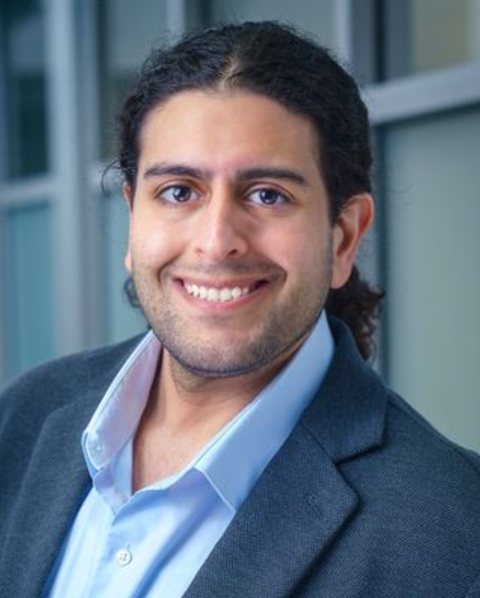 Theodore Germanos, MDBoard-certified in adult, child & adolescent, and addiction medicine
A prediction market lets you buy a contract that pays out if something happens. An election. A rate cut. A game. Tomorrow’s weather. Courts are still arguing about whether that counts as investing or as betting. That argument does not help much in a doctor’s office. The question there is simpler: what is this doing to your sleep, your money, and the people around you? On that question the research is a lot clearer than the law.
What makes any bet risky
Three things do, and none of them is what the product is called.
How fast it settles. How soon you can go again. How little stands in your way.
One study asked 616 young adults who bet at least monthly what they wanted from a betting app. The top answer was being able to bet right now, at any hour, from anywhere. The people already scoring in the problem range wanted two things more than everyone else: betting live during the event, and paying by credit card. The authors said it plainly. The features bettors like best are the ones that make betting worse.
What the research shows
Betting during the event does real damage. Researchers followed 84 people who bet live, with two short surveys a day for two weeks. About a third of those check-ins included a live bet. The people who bet the most, and lost the most money and the most goodwill at home, had two things in common. They were drinking or using while betting. And they were betting to change how they felt.
The reason matters more than the label. In a study of 920 sports bettors, two motives went with worse gambling: betting to cope, and betting for money. That held whether they bet live, bet on single games, or bet the old-fashioned way. Change the wrapper and the psychology stays the same.
Researchers are careful here, so I will be too. A 2024 commentary argues that claims about sports betting being a new and worse kind of harm have run ahead of the evidence. Prediction markets are new enough that nobody has a solid number for how many users get into trouble. What we do have is a long and boring list of what makes a product risky. Prediction markets tick most of the boxes.
Why “it’s a market, not a bet” is the dangerous part
Words do work here. Call it a position instead of a bet and you can open the app at the dinner table. Call a loss a drawdown and nobody asks a second question. The conversation a blown parlay would have started in March gets pushed to September.
There is a practical gap too. When you ban yourself from sportsbooks, that ban covers the sportsbooks your state licenses. A site regulated as a financial exchange is not on that list. So someone who did the hard thing, admitted a problem and signed himself off, can open a different door the same night and read it as permission.
What it looks like by the time someone books an appointment
Bets get bigger after losses, not after wins. Nights go by waiting for something to settle. Money shows up in the account that was meant for rent, or tuition, or taxes. The screen gets turned away when someone walks in. The number you say out loud is smaller than the number on the phone. You decide to stop, and then you do not stop.
You do not have to lose everything first. Waiting until you have is the most expensive version of this.
It is usually not only the gambling
Gambling problems rarely travel alone. Depression and anxiety come along. So do ADHD, autism spectrum presentations, and drinking or stimulant use. So does a history that started long before any market did.
In a 2026 study of people in treatment for gambling problems, 81% reported at least one difficult childhood experience, and 40.5% reported four or more. That is about five times the usual rate. The people with the worst gambling had the most of them. Many also described gambling as a way to manage how they felt, which is the same coping motive the betting research keeps finding.
I am board-certified in adult, child & adolescent, and addiction medicine. That means one appointment looks at all of it, instead of splitting you across three referrals.
If this sounds like trading, that is not a coincidence
Fast, heavy trading has been flagged in the psychiatric literature as gambling-like, capable of the same debt and the same damage, with a standing request that doctors ask about it. I work with traders specifically. See a psychiatrist for traders and gambling and behavioral addiction, or psychiatrade.com for the non-clinical side of that work.
How care works
Apply
A short application online — about 5 to 7 minutes, no card required.
Evaluation
A 60 to 90 minute appointment by secure video. Nothing is decided before it.
Plan
Treatment, and the practical guardrails that make next month different.
Is a prediction market gambling?
The law has not settled it. In September 2026 one federal appeals court said Ohio and Tennessee can treat these contracts under their gambling laws. Another court said the opposite about New Jersey. The Supreme Court may end up deciding. In an appointment it matters less than people expect. Gambling disorder is defined by what the behaviour does to you, not by who licenses the website.
I only use them to hedge, or because I have a view. Is that a problem?
Usually not. Plenty of people take a position and then go to bed. Watch the behaviour instead of the label. Are your bets getting bigger after you lose? Are you up at night waiting for one to settle? Is money going in that was meant for something else? Are you telling people a smaller number than the real one?
I am up money. Can it still be a problem?
Yes. Winning is not the line between a hobby and a disorder. You can be up on the year and still be sleeping badly, hiding it from your partner, and unable to stop when you decide to. That is worth an appointment on its own.
I banned myself from sportsbooks. Why can I still do this?
Because that ban covers the sportsbooks your state licenses. A site regulated as a financial exchange is not on that list. If you went to the trouble of banning yourself, treat the open door as a fact about the problem, not a green light.
What happens at the evaluation?
One appointment, 60 to 90 minutes, by secure video. We go through the history and what this is costing you in sleep, money, work and relationships. We also look at what else is going on: mood, anxiety, ADHD, autism spectrum presentations, alcohol and drug use. You leave with a real opinion, including when the honest answer is that you do not need treatment.
Can it be treated?
Yes, and it responds better the earlier you start. Treatment is usually structured therapeutic work plus attention to whatever sits underneath it. Medication is sometimes part of it, and that gets discussed at the evaluation rather than decided in advance. Gamblers Anonymous is free, and 1-800-GAMBLER is answered any hour.
The studies cited above, found through PubMed. Figures are quoted as the authors reported them.
- Hing N, Russell AMT, Tulloch C, et al. Feature preferences of sports betting platforms: a discrete choice experiment shows why young bettors prefer smartphones. J Behav Addict. 2024;13(1):134–145. doi:10.1556/2006.2023.00073
- Kim HS, Coelho SG, Vieira JL, Keough MT. Dispositional and contextual correlates of in-play sports betting and related harms: a 2-week ecological momentary assessment study. Psychol Addict Behav. 2023;37(8):1066–1079. doi:10.1037/adb0000948
- Maxie JJ, Coelho SG, David J, Keough MT, Kim HS. Are gambling motives all the same? The psychometric properties of the GMQ-F amongst sports bettors. J Gambl Stud. 2026;42(2):457–473. doi:10.1007/s10899-025-10450-7
- Whelan JP, Pfund RA, Ginley MK. We might have a sports gambling problem and it is not what you think: a commentary. J Gambl Stud. 2024;40(4):2027–2030. doi:10.1007/s10899-024-10315-5
- Moxey M, Dennie E, Rossi R, Sallis H, Herbert A. Exploring adverse childhood experiences (ACEs) among those seeking treatment for gambling problems: a mixed-methods study. Addict Behav. 2026;173:108535. doi:10.1016/j.addbeh.2025.108535
- Håkansson A, Fernández-Aranda F, Jiménez-Murcia S. Gambling-like day trading during the COVID-19 pandemic — need for research on a pandemic-related risk of indebtedness and mental health impact. Front Psychiatry. 2021;12:715946. doi:10.3389/fpsyt.2021.715946
- On the law: on 25 September 2026 the Sixth Circuit held that Ohio and Tennessee may apply their gambling laws to these contracts. The Third Circuit had ruled the other way for New Jersey. The disagreement may end up at the Supreme Court.
Also see: Gambling & behavioral addiction · Addiction medicine · Trading psychiatrist · Anxiety & depression · ADHD · Telehealth psychiatry in California