Psychiatry for people whose work amplifies everything
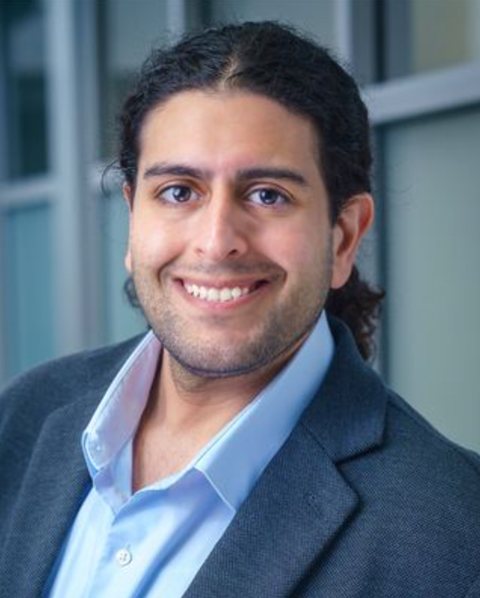 Theodore Germanos, MDTriple board-certified — adult, child & adolescent, and addiction medicine
High-pressure careers do not create new psychiatric conditions — they amplify ordinary ones until they become expensive. Decision fatigue compounds. Sleep debt turns into risk you cannot feel. A drink after work becomes load-bearing. ADHD that was an asset at one level of responsibility becomes a liability at the next. Performance psychiatry is ordinary, rigorous psychiatry applied to exactly this territory.
Who this is for
Physicians and surgeons. Founders and executives. Attorneys, pilots, athletes, and traders — anyone whose profession punishes small cognitive slippage at scale, and who therefore cannot afford the generic version of mental health care. My patients are usually functioning well by outside measures. That is precisely the problem: high performance hides deterioration until it stops hiding it.
What makes this psychiatry, not coaching
A coach optimizes a healthy system. A psychiatrist is trained to notice when the system itself is off — when the “motivation problem” is depression, when the “edge” is hypomania, when the focus ritual is a stimulant problem, when the risk appetite is a sleep problem. I am triple board-certified (adult, child & adolescent, and addiction medicine), I can diagnose, treat, and prescribe, and I work from the research on how pressure actually degrades judgment: decision fatigue, sleep-restricted risk drift, and the physiology of tilt. That training is the difference between managing a symptom and fixing the machine.
The trading mind, specifically
Markets are a special case of performance under pressure — a profession that pays out intermittently, punishes impulsivity, and quietly selects for the exact psychology it then destroys. I trade markets myself, and I built Psychiatrade — a free educational screener that maps trading behavior against the clinical literature. Its starting point, why traders keep losing money, breaks the usual patterns down into four recognizable ones. For traders who want to go beyond education into actual treatment, that work continues here.
Discretion is part of the treatment
Private-pay, out-of-network, secure telehealth: no insurer receives a diagnosis unless you submit one yourself, no waiting room, no chance encounter. For many of my patients this is not a luxury; it is the precondition for getting help at all.
Apply
A short application — about 5–7 minutes, no card required.
Evaluation
A thorough diagnostic conversation.
Plan
Treatment built to fit, with unhurried follow-ups.
What is a performance psychiatrist?
A licensed physician — a psychiatrist — who applies full medical psychiatry to the problems of high-pressure work: burnout, decision fatigue, sleep and risk-taking, substance creep, ADHD, anxiety, and mood conditions in people whose careers magnify their cost.
How is this different from an executive coach or performance coach?
Scope. A coach cannot diagnose, cannot prescribe, and is not trained to recognize when a performance problem is actually a medical one. I do all three, and I refer honestly when what you need really is a coach rather than a doctor.
Do I need a diagnosis to work with you?
No. Needing to be in crisis before seeing a psychiatrist is like needing a heart attack before seeing a cardiologist. Early, subclinical patterns are where treatment does its cheapest and best work.
Do you work with day traders?
Yes — it is a signature focus. Start with the free screener at psychiatrade.com if you want the educational version, or apply here directly if you want clinical care.
Will my employer or licensing board find out?
Care is confidential within the standard legal limits of medicine, and private-pay means no insurance record is generated by treatment itself. Concerns specific to licensed professionals — physicians, pilots, attorneys — are something I understand well and discuss candidly at evaluation.
Also see: Telehealth psychiatry in California · ADHD · Addiction medicine · Gambling & behavioral addiction · Trading psychiatrist · Los Angeles